
When the Feed Goes Dark: What a TikTok Ban Means for PR, Influencers, and Public Trust
- faithalissaa
- Jul 17, 2025
- 3 min read
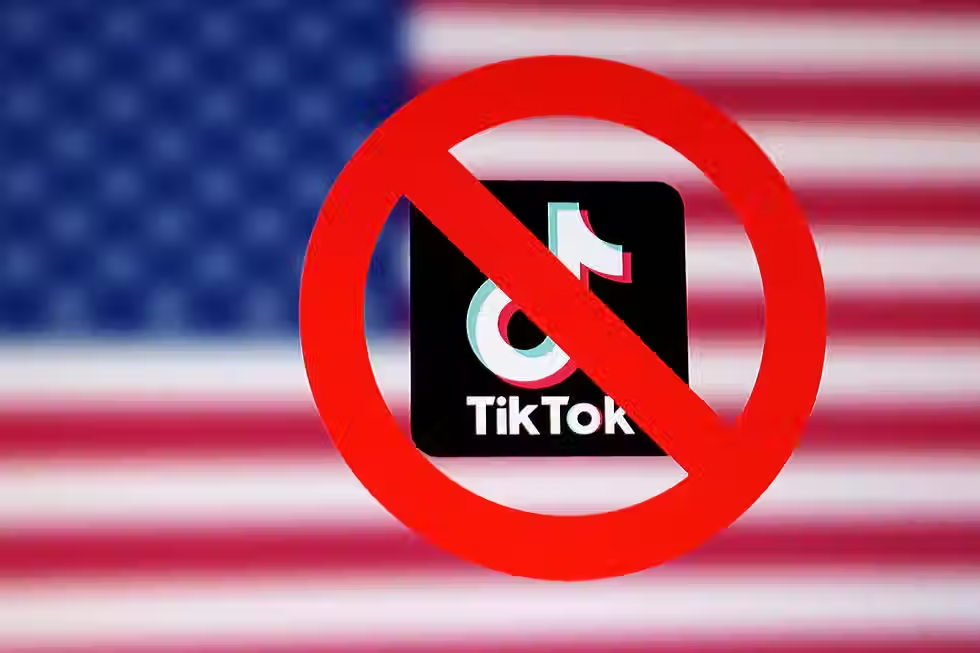
TikTok is not another social media app. It's a cultural phenomenon, a search engine, and a career launcher all in one. So, when the U.S. enacted legislation in 2024 that could ban TikTok if its parent company, ByteDance, doesn't divest by January 2025, it rang alarm bells not only in Washington but across the internet. The Protecting Americans from Foreign Adversary Controlled Applications Act made one thing abundantly clear to PR professionals everywhere. If you build your strategy on rented land, you should always be ready for it to disappear.
How People Reacted When TikTok Was in Danger
The moment the news of the ban came out, people acted quickly. TikTok users were angry, confused, and, above all, scared. For creators, the app is not just a form of entertainment. It is their portfolio, workplace, and stage. Some influencers posted tearful videos that seemed like online goodbyes. There were some documented "final TikToks" where they expressed their gratitude to their followers and welcomed them to join them on other platforms. Others went live to rant, cry, or sit silently and let the moment speak for itself.
#SaveTikTok trended in the meanwhile. People filled the comment sections with pleas to lawmakers to think again. Even some asked their own followers to call their representatives. This wasn't just a tech issue anymore; it was about people. It proves that people have emotional ties with platforms and that PR teams cannot ignore. When your audience trusts a site, and you use that space to speak, the loss is more than what analytics can quantify.
What It Means for Influencers and Their Careers
Influencers who had invested everything in the TikTok basket had to scramble. Creators have started revising their contracts to prepare for worst-case scenarios, Digiday reports. Many added clauses that would allow them to post content on other platforms if TikTok were to be turned off. This isn't just a legal development, it's emotional. These creators had built their brands through short-form content and community building, and now that foundation feels shaky.
The most innovative creators were already diversifying their efforts. Those who had built an audience on YouTube Shorts or Instagram Reels were more prepared. They could move their audiences elsewhere. Not everyone was so lucky, however. Micro-influencers and niche creators had to start over on new websites, often without the same level of push or momentum. The reality is that TikTok has made it easier than ever for everyday people to go viral. To lose that is to risk losing opportunity, particularly for those beyond the traditional media bubbles.
Why PR Professionals Should Take Notice
For PR teams, this was the wake-up call that they badly needed. The majority of campaigns are overly focused on a single app or type of content. TikTok has become the go-to destination for product launches, trendjacking, and influencer partnerships. But PR is communications, not platforms. PRSA states now is the moment to get campaigns flexible and ready to move across platforms.
That means developing creatives that can run on any platform. A PR strategy that relies on a single app is too vulnerable. Agencies are already demanding more cross-channel shareable content. It's not TikTok-first thinking, so much as it's about getting in front of people wherever they're already spending time. Later reports indicate that brands are shifting their budgets to YouTube, Instagram, and even Pinterest. This shows flexibility is now a core competency for PR planning.
What This Teaches Us About Platform Control
This is not a discussion about content strategy or influencer partnerships. It's also a discussion about data, privacy, and public trust. The ban is a result of concerns about TikTok's ownership and the harvesting of user data. These are not just tech problems, they're PR problems. When a brand is perceived as ignoring valid privacy concerns, it can quickly lose trust.
As DPA Communications indicates, there is a chance for the PR profession to restart. Instead of going for viral moments, we can go back to public relations basics: building relationships, telling great stories, and creating lasting trust beyond a 15-second video. It's also the time to place a bet on owned media with newsletters, websites, and podcasts, channels where we have control of the message and the platform.
Final Thoughts
No one knows if TikTok will be banned or not. It may be sold, it may get blocked, or it may win in court. But one thing is already clear. PR teams, influencers, and brands need to begin treating platforms as temporary homes, not permanent dwellings. They are tools, not foundations. The most powerful PR plan you can develop is one that's ready to move, ready to adapt, and prepared to interact wherever the dialogue leads next.


Comments